
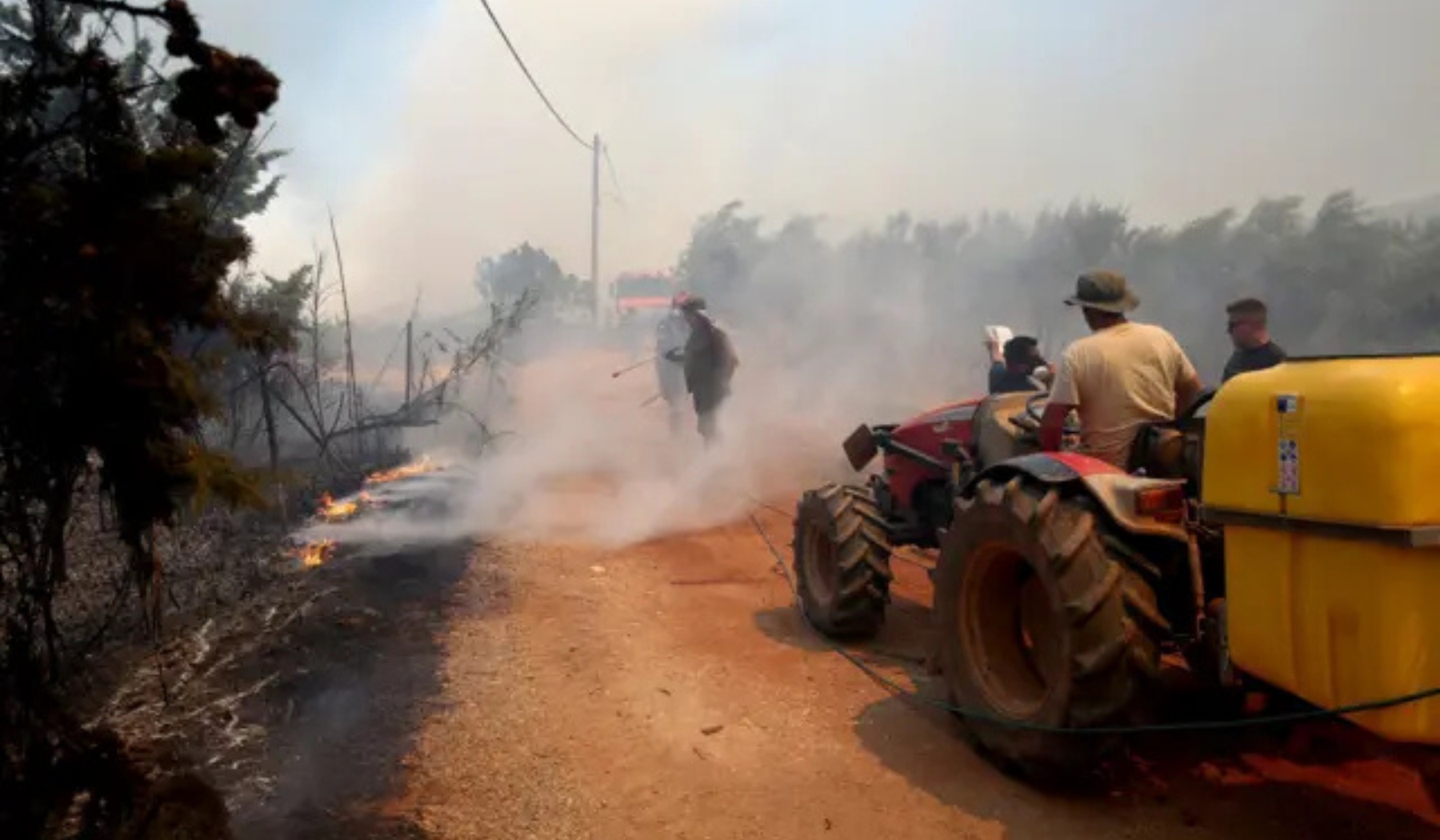
Thousands Evacuate as Wildfires and Early Heatwave Grip Europe
ISTANBUL/PARIS — Wildfires raged across Türkiye and France on Monday, forcing mass evacuations as an intense early summer heatwave swept through Europe, shattering temperature records and prompting health alerts in multiple countries.
Extreme Heat Hits Europe Early
Temperatures in parts of Western Europe soared 5-10°C above seasonal norms, with scientists attributing the extreme conditions to human-induced climate change.
Read More : Mark Ronson Reveals His All-Time Favorite Track—And It’s Not “Uptown Funk”
“This is the kind of heat we usually see in July or August, not June,” said Samantha Burgess of the EU’s Copernicus Climate Change Service.
Wildfires Force Mass Evacuations
In Türkiye, strong winds fueled wildfires in Izmir province, leading to the evacuation of over 50,000 people, including 42,000 in Izmir alone, according to emergency authorities. The country’s coastal regions have faced increasingly severe fires in recent years due to hotter, drier summers.
In France, wildfires broke out in the Aude department, where temperatures exceeded 40°C (104°F). Over 400 hectares burned, forcing evacuations from a campsite and a historic abbey. Authorities said the fires were under control but not yet extinguished.
France’s weather service issued orange heatwave alerts for 84 out of 101 departments, with peak temperatures expected on Tuesday and Wednesday.
Record-Breaking Heat Across the Continent
- Spain recorded its hottest June ever, with temperatures hitting 43.7°C (110.7°F) in El Granado. In Seville, where a UN conference was held, the mercury reached 42°C (107.6°F).
- Italy issued red heatwave alerts for 16 cities, including Rome and Milan. The Lombardy region may ban outdoor work during peak heat hours.
- Germany saw temperatures climb to 34°C (93°F), prompting warnings and calls to conserve water as river levels dropped, disrupting shipping.
- Even the Netherlands, known for its mild climate, warned of high temperatures and humidity in the coming days.
Health and Economic Impacts
Extreme heat poses severe risks, especially for the elderly, infants, and outdoor workers. Swiss Re recently reported that heat-related deaths globally reach 480,000 annually, exceeding fatalities from floods, earthquakes, and hurricanes combined.
The heatwave has also strained energy grids, with electricity demand surging for cooling, while low river levels on the Rhine disrupted freight transport.
A Warming Planet
Scientists warn that rising greenhouse gas emissions are driving more frequent and intense heatwaves. 2024 was the hottest year on record, and 2025 could follow suit.
As Europe battles flames and scorching temperatures, experts urge climate adaptation measures to mitigate the growing crisis.