
China Commissions Advanced Fujian Aircraft Carrier in Growing US Naval Competition
China has officially brought its most modern warship, the Fujian aircraft carrier, into active use. This step marks a key moment in the country’s efforts to build a stronger navy, as it faces off against the United States in the Pacific region.
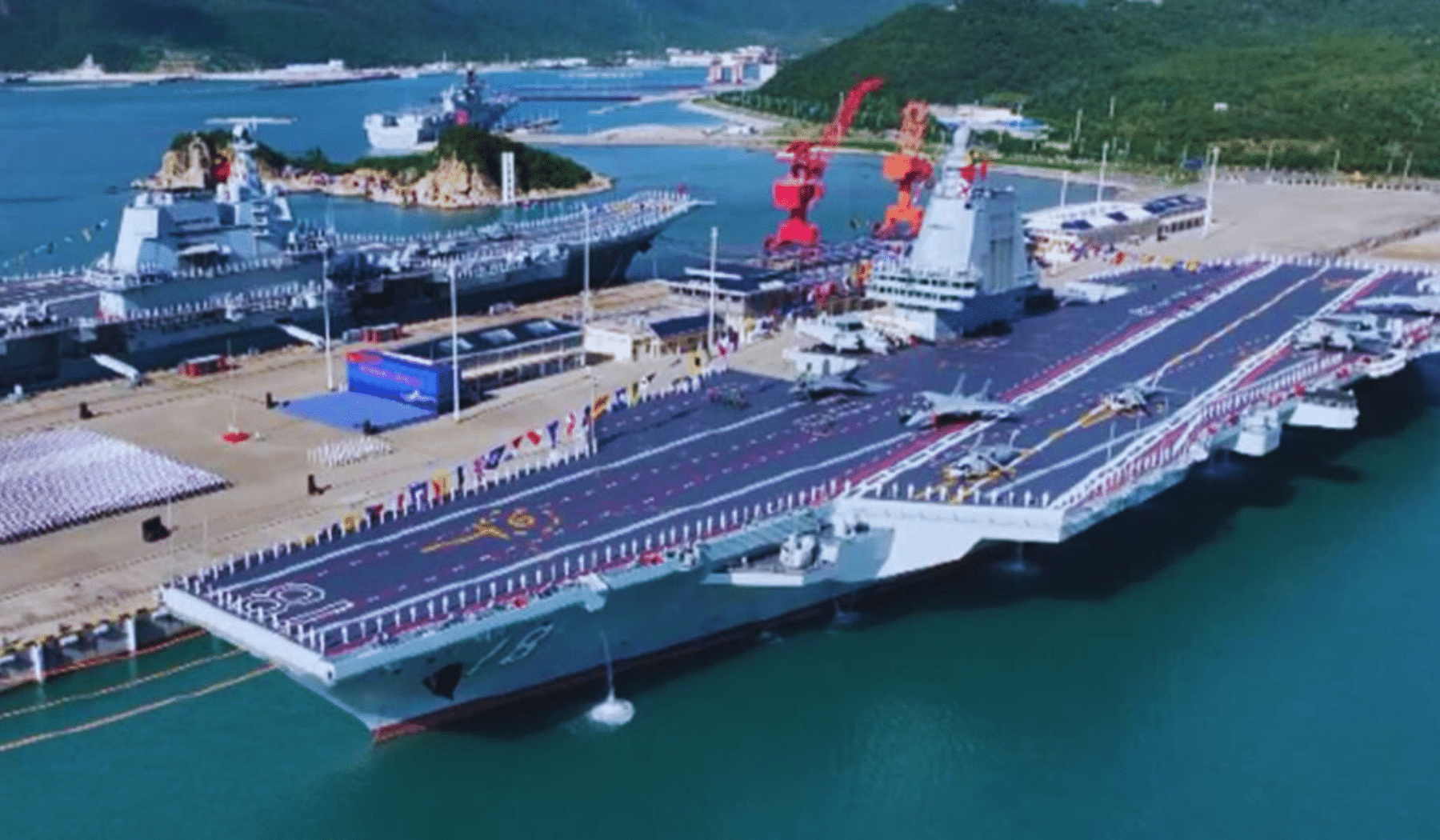
The commissioning happened on November 5, 2025, during a formal event in Sanya, a city in southern Hainan province. Chinese President Xi Jinping led the ceremony. He walked the deck of the ship and talked with the crew members. The sailors saluted and called out, “Follow the party’s command, fight to win, and uphold fine conduct!” State media called the event a “major milestone” for China’s sea power.
The Fujian is China’s third aircraft carrier and the first one fully made at home. It weighs about 80,000 tons when fully loaded and measures 316 meters long. Unlike China’s earlier carriers, the Liaoning and Shandong, which came from Russia and use ski-jump ramps for takeoffs, the Fujian has a flat deck and electromagnetic catapults. These systems launch planes faster and let them carry more fuel and weapons for strikes over longer distances. The ship can hold up to three kinds of aircraft, including the new J-35 stealth fighter and early-warning planes.
Experts say the Fujian brings China closer to matching top navies like the US, which also uses this catapult technology on its newest carriers. Over the past decade, China has grown its fleet to the world’s largest by number of ships. This includes more than 370 vessels, compared to the US Navy’s 290. The move comes amid rising tensions in the South China Sea and around Taiwan, where both countries have increased military drills.
US officials have noted China’s fast naval growth as a challenge to the balance of power in Asia. They plan to keep their edge with new ships and alliances with nations like Japan and Australia. For now, the Fujian will join training missions to test its full power.
This development shows how both superpowers are racing to control key sea routes. It could shape global trade and security for years to come.
Read More News>> Surge in China’s Missile Production Sites Uncovered by Satellite Imagery