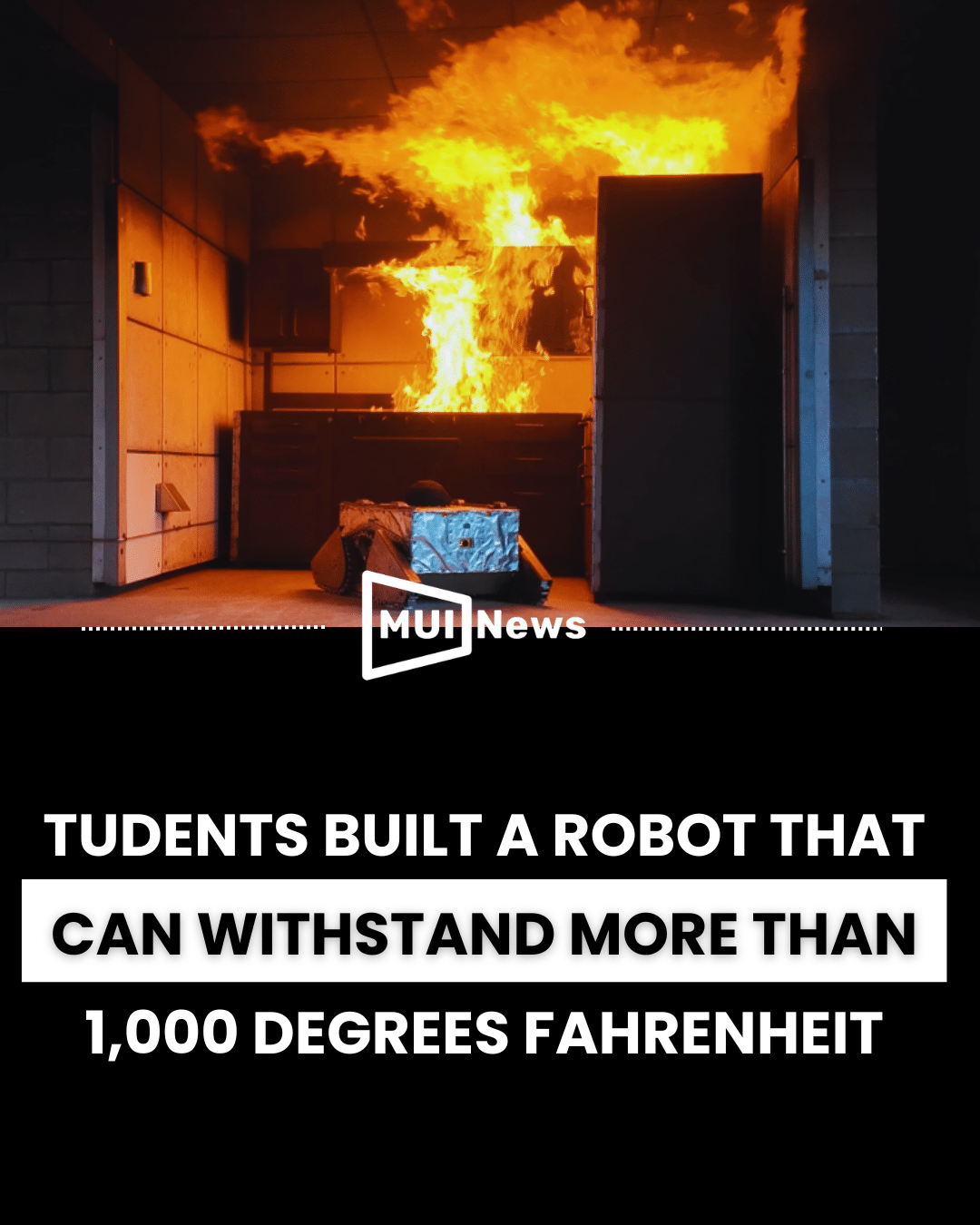
Students Develop Fire-Resistant Robot That Endures 1,200 Degrees Fahrenheit
A team of university students and recent graduates in Texas has created an innovative robot designed to help firefighters enter dangerous burning buildings. Known as FireBot, this rugged machine can handle extreme heat, giving first responders key information without putting their lives at risk.
The project comes from Paradigm Robotics, a startup led by Siddharth Thakur, a University of Texas at Austin engineering graduate. Thakur started working on the idea about 13 years ago, at just 10 years old, after a tragic fire in Houston killed five firefighters—two of whom he knew. He began by drawing sketches and testing early models on a backyard grill. Today, with help from co-founder Krishnan Ram and a group of young engineers, FireBot has grown into a powerful tool for emergency situations.
FireBot weighs 300 pounds and measures four feet long. It is built from strong materials like stainless steel, tungsten, and titanium, making it tough against fire, harsh chemicals, and even collapsing roofs. The latest model, version 4, can withstand temperatures up to 1,200 degrees Fahrenheit for 15 minutes. This is much longer than a human firefighter could last in the same conditions. The robot moves on tracks that let it climb stairs and obstacles, allowing it to search multiple floors in a building.
Equipped with thermal and visual cameras, plus gas sensors, FireBot sends live video feeds and heat data back to operators outside. Firefighters control it with a simple handheld device, using it to spot victims, check for hazards, and map safe paths. Unlike bigger robots that focus on putting out fires, FireBot is smaller and lighter, perfect for quick scouting missions.
The team has partnered with fire departments in Austin and Round Rock, Texas, to test the robot in real training drills. Former Austin Fire Chief Richard L. Davis, now a consultant, praises its fire resistance: “The best feature I see on the FireBot is its ability to withstand fire… having that be able to go in and get any type of intel that’s needed, is beneficial.” Round Rock Fire Chief Shane Glaiser adds that it acts as a helpful tool, not a replacement, especially in chemical spills or risky entries.
Thakur’s goal is clear: “Our dream is to give every firefighter access to one of these robots so that they can be even safer on the job.” As testing continues across the country, FireBot could soon change how teams handle high-risk fires, potentially saving more lives in the process.